Low Carbon Rice: Reducing climate impact of rice production in Indonesia
Rice feeds half of the world’s population on a daily basis, but it is also a signifcant contributor to global warming. It accounts for around 2.5% of total global human-induced GHG emissions, making its climate footprint comparable to that of international aviation.
Indonesia is the third-largest rice producer in the world. At the same time, rice producers are among the most vulnerable to climate change. They face drought, floods, high temperatures, and rising sea levels, all of which directly threaten their livelihoods.
Some of the main challenges faced by rice millers include:
- Lack of access to financing for improved technology
- Limited awareness and technical knowledge of sustainable rice production methods
- Inability to secure higher prices for sustainable rice due to government control over pricing and exports
- Underdeveloped business models for new income streams, such as verified sustainable rice, rice straw utilisation, and carbon credits from avoided emissions
Rice millers are also highly affected by climate change. Twenty million hectares of rice fields are prone to flooding, while another 20 million hectares are exposed to drought. Rice cultivation accounts for 40% of global freshwater use in irrigated lowland production systems, which are widely used by farmers in Java, Indonesia.
In addition, agrochemicals are often overused in rice cultivation, leading to further deterioration of water quality, ecosystem integrity, and human health.
While many challenges exist at farm level, this project primarily worked directly with rice millers to address post-harvest issues. Engagement with smallholder farmers was carried out through the advocacy level and policy dialogue on sustainable rice production.
Target groups
By the end of the project period, the project had reached a wide range of stakeholders, including:
- 150 small rice millers receiving technical assistance and 25 medium to larger millers engaged in business matching
- 8 national-level government entities, 33 local agency offices
- 352 private sector actos, including supply chain stakeholders, HORECA businesses, and major agri-tech companies
- 31 farmer groups, 8 farmer group associations, 8 associations, and 5 CSOs/NGOs
- 10 financial sector actors, including state-owned and commercial banks, funding and regulatory agencies, and international development finance insitutions
The project’s main objective was to reduce the climate impact of rice production through the adoption of sustainable practices at the post-harvest level. More specifically, the project aimed to:
- Create enabling conditions and supportive policies for sustainable rice production through policy dialogue
- Develop a more inclusive governance model for the sustainable rice sector through multi-stakeholder engagement
- Improve market access for sustainable rice through private sector collaboration
- Expand access to finance for rice producers through technical assistance and new business models
- Ensure effective project communication and resource use across stakeholders

According to Climate Home News, rice production is responsible for an estimated 12% of global methane emissions, mainly due to anaerobic decomposition during cultivation. Farmers in Java, Indonesia, typically use more than 1,400 litres of water to produce just 1kg of rice. This high level of water use reduces freshwater availability for human consumption, aquatic ecosystems, and other needs, contributing to increasing water conflicts.
Rice production therefore comes with significant environmental and climate costs. At the same time, entire regions depend on it as a staple food. In Indonesia, rice plays a central role in daily life, culture, and the national economy.
The Low Carbon Rice project, implemented by Preferred by Nature in cooperation with Koalisi Rakyat untuk Kedaulatan Pangan (KRKP or people’s coalition on food sovereignty) and Perkumpulan Penggilingan Padi dan Pengusaha Beras Indonesia (PERPADI or Indonesian association of rice millers and traders), and funded by the EU SWITCH-Asia grant programme, was designed to address the environmental impacts of rice production in Indonesia.
The project sought to minimise the climate impact of rice production by introducing sustainable practices at the post-harvest level. It also supported policy dialogue with relevant Indonesian authorities at national and district levels and strengthened stakeholder capacity in sustainable rice production.
Our journey & impact (2022–2025)
From pilot actions to national ambition, the project has supported the transformation of Indonesia’s rice milling sector through policy engagement, low-carbon technology, and market development.
2022 – Building the foundation
The project established its operational base through national and district-level launches across five regions. A total of 175 rice millers were selected, supported by baseline studies on GHG emissions, supply chains, and policy frameworks. Capacity building through BMP and ToT programmes improved milling efficiency and reduced post-harvest losses.
2023 – System transformation begins
Governance structures were formalised with the establishment of the SRP National Working Group and district task forces. Technical transition began, with 26 millers shifting from diesel to electricity, supported by a strategic partnership between PERPADI and PLN.
2024 – Scaling and market integration
The project advanced policy and market integration, including five draft district regulations. This included Klaten’s enacted Perbup No. 64/2024 and the designation of low-carbon rice as a flagship product in Madiun. Engagement expanded to 1,430 stakeholders, alongside the launch of a digital traceability system and improved access to commercial finance for 40 millers.
2025 – Results and scale
The project exceeded its climate target, achieving a 20.8% reduction in GHG emissions. National SRP guidelines were finalised, financial access expanded to 49 millers through KUR, and global knowledge exchange was strengthened. In total, 133 partners committed to sustaining and scaling the initiative beyond the project lifecycle.
Outcomes and impact
The project enabled rice millers to produce higher-quality rice at lower cost, achieving 41% energy savings and 40% efficiency gains. By strengthening business linkages between farmers, millers, and the HORECA sector, and securing government commitment, it has established a pathway for continued low-carbon rice production.
This transformation contributes to climate change mitigation by integrating sustainable practices into Indonesia’s development agenda.
Way forward
Building on these results, the project has developed a roadmap to scale SRP implementation to one million hectares. Ongoing advocacy aims to classify sustainable rice as “Specialty Rice”, which would enable price premiums and support long-term financial incentives for low-carbon production.
Project materials
- Analysis of Rice Cultivation Sustainability in Rice Production Centre Areas, Indonesia (English)
- Baseline Study on Sustainable Rice Supply Chain, Market and Consumers in Central Java and East Java (English | Bahasa Indonesia)
- Business Plan Template for the Revitalisation of PPK (Bahasa Indonesia)
- Feasibility Study of Rice Straw and Husk By‑Product Processing in Indonesia (English | Bahasa Indonesia)
- Feasibility Study on Carbon Credits for Sustainable Rice in Indonesia (English | Bahasa Indonesia)
- Feasibility Study to Develop a Sustainable Rice Platform (SRP) towards 1 Million Hectares in Indonesia (English)
- GHG Baseline Study at Farmer Level (2025) (English)
- GHG Baseline Study at Rice Mills (2024) (English)
- GHG Endline Study at Rice Mills (2025) (English)
- Low Carbon Rice – Impact Sheet (English | Bahasa Indonesia)
- National Interpretation Guidelines of SRP for Sustainable Rice Cultivation in Indonesia (English | Bahasa Indonesia)
- Policy Brief: SRP Rice as Specialty Rice (English | Bahasa Indonesia)
- Research Index of Sustainable Rice Cultivation Standards in 5 Regencies in Central and East Java (Bahasa Indonesia)
- Rice Closed Loop Business Model (English)
- Study on Low Carbon Sustainable Rice as Specialty Rice (English | Bahasa Indonesia)
The project described on this webpage was co-funded by the European Union. The contents are the sole responsibility of the Low Carbon Rice Project implementing consortium and do not necessarily reflect the views of the European Union.


Project Details:
Title
Reducing Climate Impact of Rice Production in Indonesia
Angga Maulana Yusuf
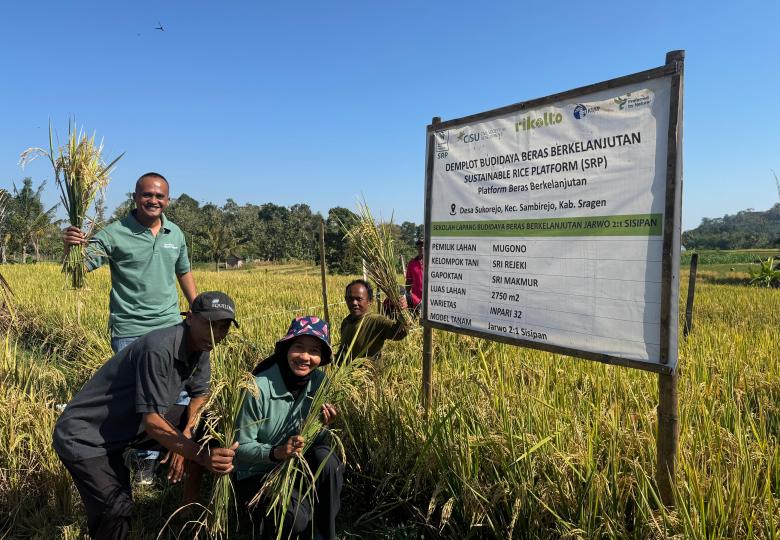
From rice fields to farmer influence: increasing civic and economic space for farmers in Java's...
The project "From Rice Fields to Farmer Influence: Increasing Civic and Economic Space for Farmers in Java's Rice Heartland" aims ...
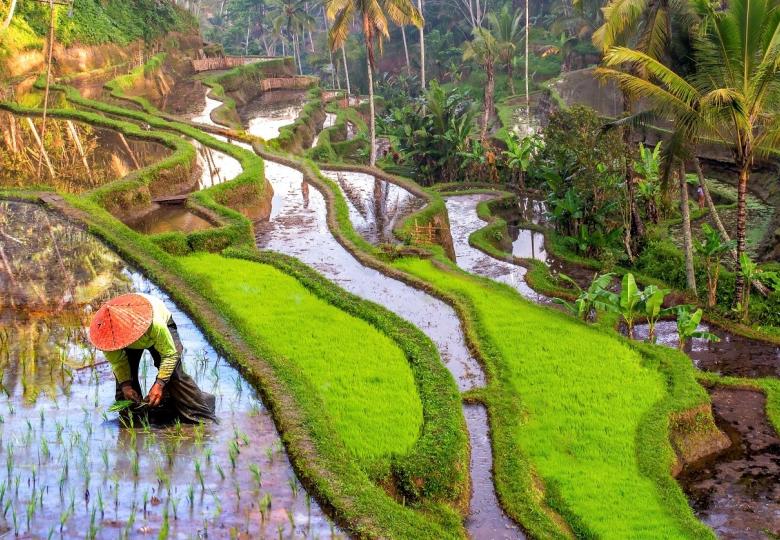
Low Carbon Rice: Reducing climate impact of rice production in Indonesia
Baca versi Bahasa IndonesiaRice feeds half of the world’s population on a daily basis, but it is also a signifcant contributor to ...
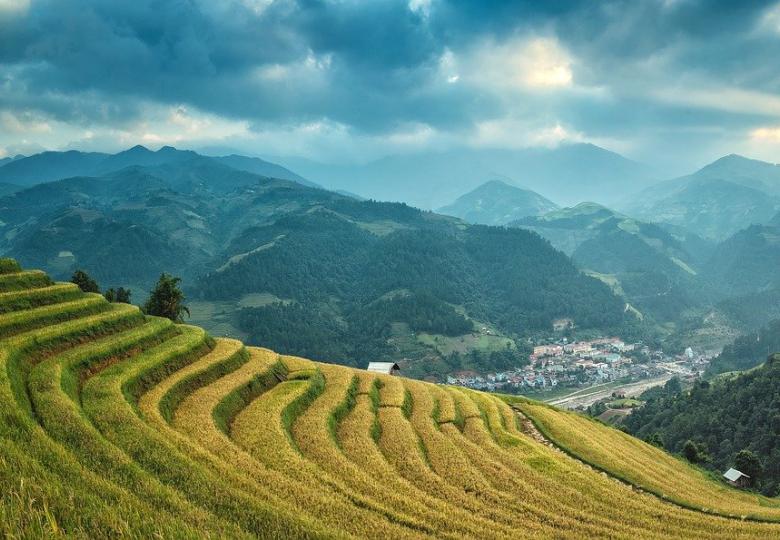
Empowering Indonesian rice farmers with sustainable practices for better livelihoods
Globally, 20 million hectares of rice fields are prone to floods; another 20 million hectares are susceptible to drought. Rice cul...